Longitudinal Associations Between Sleep Duration and Adiposity
Presenting observational evidence from large prospective cohort studies examining sleep duration and body composition outcomes.
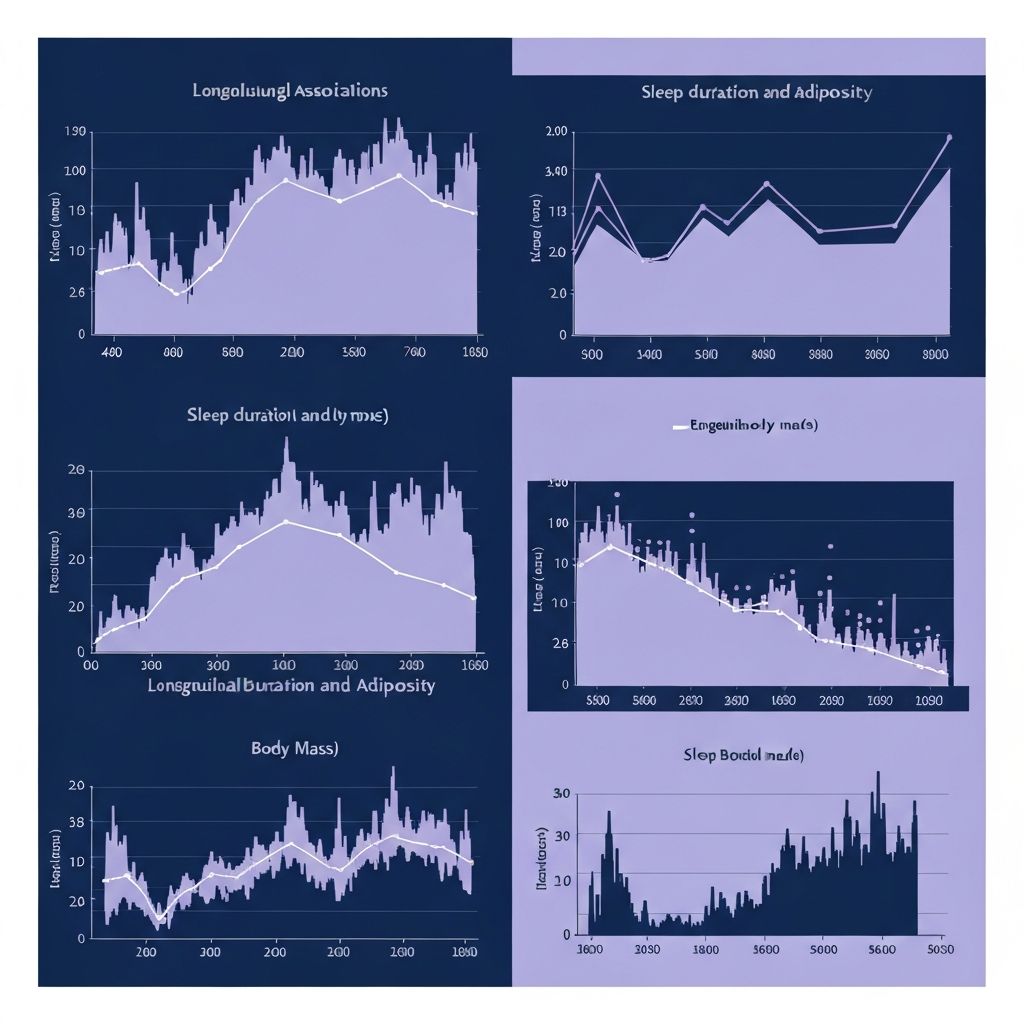
Framingham Heart Study: Sleep and Weight Gain Trajectories
The Framingham Heart Study, a prospective cohort study initiated in 1948 and now including over 5,000 participants, has examined associations between self-reported sleep duration and objectively measured weight gain over 10-year periods. Participants reporting habitual sleep duration of less than 6 hours per night demonstrated significantly greater 10-year weight gain compared to those sleeping 7-8 hours. The magnitude of difference was approximately 5-7 kilograms greater weight gain over 10 years in the short-sleep group compared to the normal-sleep reference group.
Body mass index (BMI) increase in short-sleep individuals showed dose-response relationships, with progressively greater BMI increases in those sleeping 4-5 hours compared to those sleeping 5-6 hours. The Framingham data further demonstrated that long sleep duration (greater than 9 hours) also associated with greater weight gain compared to the 7-8 hour reference group, suggesting a U-shaped association between sleep duration and weight change. Waist circumference, a more specific measure of central adiposity, showed similar sleep duration associations, indicating preferential expansion of abdominal adipose tissue in both short and long sleep groups.
Nurses' Health Study: Gender-Specific Sleep-Adiposity Associations
The Nurses' Health Study, a prospective cohort of approximately 70,000 female nurses followed since 1976, examined sleep duration and body weight changes over 16 years. Women reporting sleep duration of 5 hours or less demonstrated 1.5-2 kilogram greater weight gain over 16 years compared to those sleeping 7-8 hours, representing a 15-30% greater weight gain trajectory compared to normal-sleep counterparts. Sleep duration showed graded associations with weight gain, with each additional hour of sleep associated with approximately 0.5-kilogram reduction in expected weight gain over the follow-up period.
When stratified by age, the sleep-weight gain association was most pronounced in women aged 50-65 years (perimenopausal and early postmenopausal years). The study further demonstrated that women with both short sleep duration AND elevated daytime sleepiness showed the greatest weight gain trajectories, suggesting that both the quantity and quality of sleep may jointly influence body weight regulation. The Nurses' Health Study data indicate that sleep duration effects on weight gain accumulate progressively over years, with short-sleep individuals showing consistently greater annual weight gain rates compared to normal-sleep groups.
Health Professionals Follow-Up Study: Male Cohort Evidence
The Health Professionals Follow-Up Study, a prospective cohort of approximately 50,000 male health professionals followed since 1986, provides male-specific evidence on sleep duration and weight outcomes. Men reporting habitual sleep duration of 6 hours or less demonstrated 0.5-kilogram greater weight gain per 2-year follow-up period compared to those sleeping 7-8 hours. Over 20 years of follow-up, this differential accumulates to approximately 5-10 kilogram greater weight gain in the short-sleep group.
The magnitude of sleep-associated weight gain in the male cohort was similar to that observed in the female Nurses' Health Study, suggesting that sleep duration effects on body weight are relatively consistent across genders. The Health Professionals Follow-Up Study data further demonstrated that men who reduced their sleep duration over the follow-up period (from baseline 7-8 hours to less than 6 hours) demonstrated accelerated weight gain in subsequent follow-up periods compared to those maintaining stable sleep duration. This suggests that sleep reduction represents a modifiable risk factor for weight gain even in middle-aged and older adults.
Canadian Multicentre Osteoporosis Study: Visceral Adiposity Associations
The Canadian Multicentre Osteoporosis Study examined sleep duration and body composition in approximately 7,000 adults aged 40 years and older. Using dual-energy X-ray absorptiometry (DXA) to quantify visceral adipose tissue directly (rather than relying on surrogate measures like waist circumference), the study demonstrated that participants sleeping less than 6 hours nightly had 1.5-2.0 kilograms greater visceral adipose tissue mass compared to those sleeping 7-8 hours. This association remained significant after adjusting for total body fat mass and BMI, indicating that short sleep specifically promoted visceral adiposity accumulation rather than generalized obesity.
The selective visceral adiposity expansion associated with short sleep has particular metabolic significance because visceral fat shows stronger associations with metabolic dysfunction, cardiovascular disease, and type 2 diabetes compared to subcutaneous adiposity. The Canadian study data suggest that sleep duration effects on adiposity distribution may partly explain the heightened metabolic disease risk observed in chronically sleep-restricted populations.
Meta-Analytic Synthesis of Prospective Evidence
Multiple meta-analyses synthesizing prospective cohort studies have documented consistent sleep-adiposity associations across diverse populations and geographic regions. A meta-analysis of 30 prospective cohort studies including over 600,000 participants demonstrated that individuals sleeping less than 6 hours showed 1.27-fold increased odds of developing obesity compared to those sleeping 7-8 hours. Sleep duration showed dose-response associations, with each additional hour of sleep associated with approximately 5-7% reduction in obesity incidence.
The meta-analytic estimates remained consistent across multiple subgroups including different geographic regions (North America, Europe, Asia), different age groups (children, adults, older adults), and different body weight categories (normal weight, overweight, obese). This consistency across diverse populations suggests that sleep duration effects on body weight represent a fundamental physiological relationship rather than a population-specific phenomenon. Publication bias assessment indicated minimal evidence of selective reporting, supporting the robustness of the sleep-adiposity association.
Mechanisms Linking Sleep Duration to Longitudinal Weight Changes
The cumulative evidence from prospective cohort studies implicates multiple mechanisms by which short sleep duration produces progressive weight gain over years. First, reduced energy expenditure from decreased metabolic rate and reduced lipid oxidation during short sleep duration contributes to positive energy balance. Second, increased energy intake from elevated appetite hormones (ghrelin) and altered food preferences contributes to dietary overconsumption in short-sleep individuals. Third, reduced physical activity frequently accompanies chronic sleep restriction, further contributing to positive energy balance.
Fourth, insulin resistance development in sleep-restricted individuals promotes preferential lipid storage compared to oxidation. Fifth, circadian misalignment and altered clock gene expression promote metabolic dysfunction and adipose tissue expansion. Sixth, reduced sleep quality and increased arousals elevate sympathetic tone, promoting catecholamine-driven metabolic dysregulation and preferential visceral adiposity accumulation. The longitudinal weight gain trajectories observed in prospective cohort studies likely reflect the cumulative effect of these multiple mechanisms acting simultaneously.
Temporal Relationship and Directionality Considerations
While prospective cohort studies demonstrate clear temporal precedence of short sleep duration relative to subsequent weight gain (supporting the hypothesis that sleep influences weight gain), the possibility of bidirectional association exists: obesity and associated conditions (sleep apnea, gastroesophageal reflux disease, sleep fragmentation) may also reduce sleep quality and duration. However, longitudinal studies controlling for baseline obesity and examining participants who changed sleep duration over follow-up provide evidence that sleep duration effects on weight gain extend beyond simple reverse causality.
Additionally, intervention studies experimentally manipulating sleep duration demonstrate that sleep extension reduces subsequent energy intake and weight gain, supporting a causal relationship whereby improved sleep produces metabolic benefits. However, observational associations alone do not establish causation definitively, and unmeasured confounding variables could theoretically explain portions of the sleep-weight associations observed in cohort studies.
Limitations and Context: This article presents observational evidence from prospective cohort studies on sleep duration and weight outcomes. While associations are robust and consistent across studies, establishing causation requires experimental evidence beyond observational data. Individual weight trajectories vary substantially based on genetic factors, dietary composition, physical activity levels, and other lifestyle factors beyond sleep. This content is for educational purposes only and does not constitute personalized recommendations for weight management or sleep duration targets.
Learn more about the evidence
Explore additional research articles examining specific mechanisms, hormonal regulation, and sleep physiology underlying the sleep-metabolism relationship.
Return to blog overview