Hormonal Oscillations Across the Sleep-Wake Cycle
Examining endocrine patterns and circadian regulation of metabolic hormones throughout 24-hour cycles.
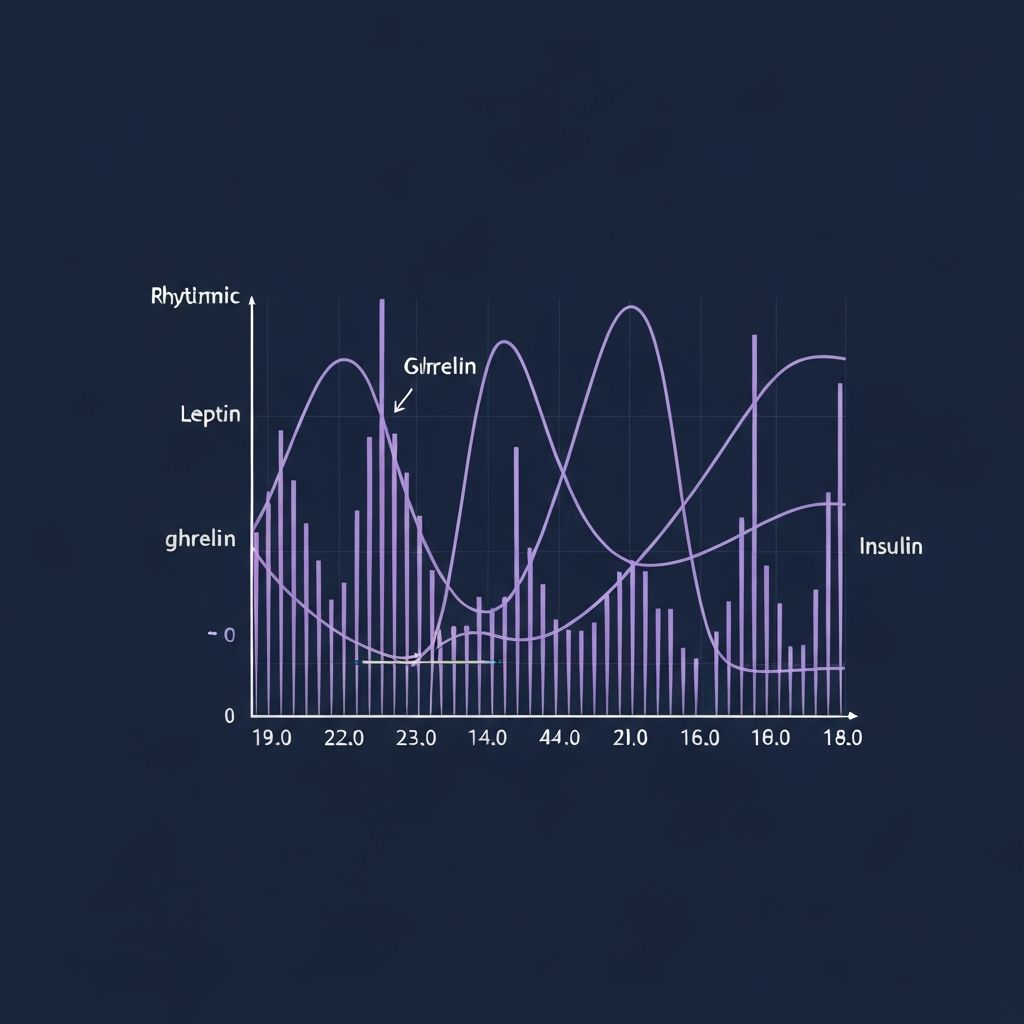
Leptin Secretion and Sleep-Related Patterns
Leptin, a 16-kiloDalton protein hormone produced primarily by adipose tissue, exerts critical regulatory effects on energy homeostasis by signaling energy sufficiency to hypothalamic nuclei controlling appetite and energy expenditure. Leptin secretion demonstrates a pronounced circadian rhythm with peak concentrations occurring during sleep periods, typically 2-4 hours after sleep onset. This peak in leptin during sleep aligns with reduced caloric intake during sleep and elevated anabolic hormone concentrations characteristic of the sleep period.
The circadian rhythm of leptin secretion is regulated by multiple factors including clock gene expression in adipose tissue, autonomic nervous system tone, and sleep-related hormonal changes. Sleep deprivation and circadian misalignment reduce nocturnal leptin concentrations, potentially contributing to increased appetite perception and altered eating behavior observed in sleep-restricted individuals. The magnitude of the circadian leptin rhythm may relate to baseline adiposity, with obese individuals demonstrating blunted leptin rhythm amplitude and elevated absolute leptin concentrations.
Ghrelin Patterns and Appetite Regulation During Sleep
Ghrelin, a 28-amino acid peptide hormone produced by gastric cells, stimulates appetite and increases food intake through orexigenic hypothalamic pathways. Ghrelin concentrations demonstrate a reciprocal circadian pattern compared to leptin, with nadir concentrations during sleep periods and elevated concentrations during wakefulness, particularly prior to anticipated meal times. This complementary pattern of leptin elevation and ghrelin suppression during sleep creates hormonal conditions favoring reduced food intake during sleep.
Sleep restriction elevates fasting ghrelin concentrations and impairs the normal nocturnal ghrelin suppression, contributing to increased appetite perception during and after periods of inadequate sleep. Experimental sleep deprivation studies demonstrate that acute sleep restriction increases ghrelin production and elevates self-reported hunger scores in subsequent wakefulness. The mechanisms underlying increased ghrelin production during sleep deprivation remain incompletely understood but may involve altered vagal signaling and changes in gastric inflammatory mediators.
Cortisol Circadian Rhythm and Sleep-Related Suppression
Cortisol, the primary glucocorticoid hormone produced by the adrenal cortex under the control of the hypothalamic-pituitary-adrenal (HPA) axis, demonstrates one of the most pronounced circadian rhythms of any human hormone. Cortisol concentrations are lowest during sleep and early sleep-related periods, with gradual elevation beginning 2-3 hours before anticipated wakefulness, reaching peak concentrations within 30-60 minutes following awakening. This cortisol awakening response represents a physiological adaptation promoting alertness and glucose mobilization at the transition from sleep to wakefulness.
Sleep deprivation and circadian misalignment dysregulate the HPA axis, resulting in elevated nighttime cortisol concentrations, blunted cortisol awakening response, and overall flattening of the cortisol rhythm. Elevated nighttime cortisol impairs insulin secretion and promotes hepatic glucose production, contributing to nocturnal hyperglycemia in sleep-deprived individuals. The chronic elevation of cortisol and altered HPA axis function in chronically sleep-restricted populations may promote preferential visceral adipose tissue accumulation through multiple mechanisms including altered lipid partitioning and increased inflammatory cytokine production.
Insulin and Glucose Regulation Across Sleep Phases
Insulin secretion and glucose concentration demonstrate circadian variation superimposed on sleep-related modulation. During sleep, insulin concentrations remain relatively modest due to reduced carbohydrate intake and elevated lipid oxidation. Insulin sensitivity demonstrates peak values during sleep and early wakefulness, with declining sensitivity progressing through daytime hours. This daily rhythm of insulin sensitivity relates to circadian variation in clock gene expression in insulin-responsive tissues and time-dependent changes in sympathetic tone.
Sleep restriction impairs insulin sensitivity across the entire 24-hour period and elevates fasting glucose concentrations. Acute sleep deprivation results in elevated evening and nighttime glucose concentrations despite suppressed insulin secretion, indicating substantial insulin resistance. Chronic sleep restriction promotes compensatory hyperinsulinemia and increased diabetes risk. The mechanisms underlying sleep deprivation-induced insulin resistance include reduced glucose transporter (GLUT4) translocation, impaired insulin signaling, and altered adipokine secretion from dysfunctional adipose tissue.
Growth Hormone and Anabolic Processes During Sleep
Growth hormone (GH) secretion demonstrates substantial sleep-related elevation, with maximal secretion occurring during early sleep, particularly during slow-wave sleep (NREM Stage 3). GH secretion is controlled by growth hormone-releasing hormone (GHRH) from the hypothalamus and is opposed by somatostatin. The sleep-related GH secretion pulse represents the largest GH release episode of the 24-hour day and reflects direct effects of sleep per se independent of circadian timing.
Growth hormone exerts metabolic effects promoting anabolic processes, including increased amino acid uptake in muscles, increased protein synthesis, and reduced carbohydrate oxidation. The sleep-related GH pulse contributes to tissue repair, muscle protein synthesis, and reduced carbohydrate metabolism during sleep. Sleep deprivation and reduced deep sleep duration substantially reduce GH secretion, impairing anabolic processes and contributing to reduced protein synthesis rates during chronic sleep restriction. Long-term consequences of reduced sleep-related GH secretion may include impaired muscle maintenance and accelerated age-related sarcopenia.
Integrated Endocrine Control of Sleep-Related Metabolism
The constellation of hormonal changes occurring during sleep—elevated leptin and GH, suppressed ghrelin and cortisol, modest insulin levels, and high insulin sensitivity—creates an integrated hormonal environment promoting anabolic processes, tissue repair, lipid oxidation, and reduced food intake. This orchestrated hormonal pattern reflects the evolutionary adaptation of sleep as a period of energy conservation and metabolic restoration.
Circadian misalignment and sleep restriction disrupt this integrated hormonal pattern, resulting in paradoxical simultaneous elevation of appetite-stimulating hormones and impairment of metabolic efficiency. The chronic hormonal dysregulation accompanying sleep restriction may explain the heightened diabetes and obesity risk observed in sleep-restricted populations.
Limitations and Context: This article presents information on sleep-related hormonal changes and their metabolic effects. Individual hormonal responses to sleep vary based on age, sex, habitual physical activity, dietary intake, and genetic factors. This content is for educational purposes only and does not constitute medical advice or personalized recommendations.
Explore related energy regulation topics
Discover additional articles on sleep physiology, substrate metabolism, and circadian rhythm effects on lipid homeostasis.
Return to blog overview